




 I want to donate
Christianity and Humour by James Cary
- authise authise
- General
- 22 Aug 2019
-
114views

“Oh, very witty.”
Has anyone ever said that to you? It’s more of a comment than a compliment. It might even be a sarcastic remark. You’ve said something that is technically funny, and could even be classified as ‘droll’, but it didn’t actually make anyone laugh.
That’s what a joke does. Or should do. We could get all technical about it, but jokes make people laugh. I’ve been getting fairly technical about it recently, having just written a book called The Sacred Art of Joking. It’s about how jokes work and how they go horribly wrong, especially in the realm of religion.
Christians seems to have a tin-ear and a straight face when it comes to comedy. Let us remember that Oliver Cromwell shut all the theatres in England. This was not a man with much use for light entertainment. A hundred years or so earlier, the brash and bawdy mystery plays were also edged off the stage. The tradition of Risus Paschalis also disappeared. This was the ‘Easter laughter’, in which preachers would tell jokes as we all laugh at the devil for being tricked into having Jesus crucified and thus saving the world.
The Reformed and Evangelical kinds of Christianity – the kind which I theologically prefer and subscribe to – have a reputation for dourness and gravity. They were worried about irreverence. After all, God is holy. Don’t make jokes about him. He probably doesn’t like it. He’s not a doofus like we are.
There are warning about the wrong kind of laughter in the very place where we find the emphasis on wisdom, the book of Proverbs. There we read of depictions of sluggards, fools and, interestingly, mockers. You don’t want to be the kind of person who sneers at everything and everyone. But that doesn’t mean we can’t be satirical. You don’t want to be a fool or a sluggard. But that mean doesn’t we can’t depict folly, as Jesus does in his parables. Or does it?
Jesus told lots of strange and troubling stories which made people angry. They seemed to be attacking the wrong target, praising glorifying odd behaviour and upsetting all the respectable people who thought they should not be the butt of the jokes. Jesus was not a stand-up comedian, but he was funny. His miracles, too, would have created giddy, light-headed joy, although some found even these offensive, being done on the Sabbath.
In the greatest cosmic joke of all time, Jesus was killed by religious people. Good people. Those who knew their Bibles by heart. Meanwhile, the hated centurion looked on and saw what those around could not see, that Jesus was indeed a righteous man.
Hopefully, we’ll be talking about these questions at Greenbelt Festival this year, where the theme is ‘Wit and Wisdom’. In era when people get every bit as furious about jokes, I can’t think of a better time to take a more radical, more Biblical and more Christ-like approach.
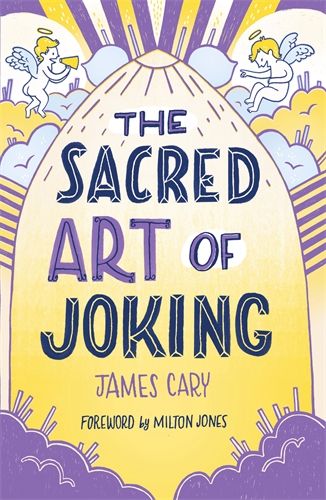
This entertaining, breezy book, explains how comedy works (with jokes and quotes) and gives much-needed insights into the controversy surrounding humour.
Related Posts
Categories
Recent Posts
1

UK Launch of Called to Care by Jo Knight
28 May 2026
5
Support SPCK with your donation
Either donate with a one-off donation or subscribe monthly.
Choose a type of donation
I want to donate
 I want to donate