

 I want to donate
What is freedom?
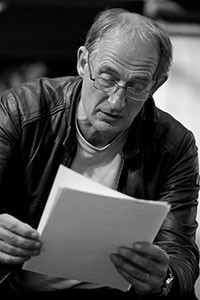
When, after a four hour car journey, I finally reached HMP North Sea Camp in Lincolnshire I met a really interesting and thoughtful group of about a dozen lads. Some admitted to struggling with reading and writing, but most were enthusiastic readers. One is writing his autobiography. Several had read my two Diffusion novels Forty-six Quid and a Bag of Dirty Washing and Bare Freedom.
In the morning I introduced the group to some of my books, answered questions about making a living as a writer and talked about working as a writer-in-residence in prisons.
The group were especially interested in the economics of writing and publishing.
I asked those who had read Forty-six Quid and a Bag of Dirty Washing and Bare Freedom to talk about the book and about some of the choices made by the main character – for example, not putting his money on a horse (good) which then turns out to win (bad). One lad in particular identified with the character’s situation (he is getting out in a few weeks), his choices and his mistakes. Some felt the character made the right choices, but others were not so sure.
This opened out into a discussion about decision-making, and how it is not always easy to know what is the right choice. We focussed on the question: when is it justified (or even necessary) to break the law? Almost everyone agreed that stealing food in order to feed a child or driving an uninsured car in order to get someone to hospital are justifiable actions, even though they are against the law. But there was less unanimity concerning the question of using violence to prevent somebody getting hurt.
In the afternoon we improvised a whole group poem about ‘Freedom’. We began with a discussion asking: Who is free? Which is more important, freedom from or freedom to? To what extent is freedom relative? Then I asked the group to find ways of using the senses to describe the abstract, intangible and elusive concept of ‘freedom’ and we wrote a poem:
Freedom
It smells of fresh rain, bluebells and pine forest
Of the cool, salty, bitter, dangerous ocean
It’s a fireplace on a stormy night;
It tastes of freshly-baked, warm toad-in-the-hole,
Of the crisp, clear, icy, long, tall glass of lemon-cordial on a hot day;
It sounds like waves lapping on a Caribbean shore
Like trees creaking and cracking in the breeze, talking to each other
Listening alone to the twittering, rising crescendo of the dawn chorus;
It feels like a dog sleeping on your feet,
Or floating on a cotton-wool cloud in an empty blue sky.
Freedom is like oxygen – it is what I breathe, gives me energy and life
Mythical as a leprechaun, elusive as a brass ring,
It’s the longed-for embrace of an unrequited love,
The rabbit that won’t come out of the hat,
It’s a state of mind
It’s ubiquitous, unobtainable, a universal panacea
You can’t live without it, but it doesn’t exist.
While most people were very pleased with the poem, one member of the group objected that it was a series of tired clichés. This led to an interesting discussion about cliché and originality – what is the difference between a recognisable and understood image and a cliché? Can a cliché still be effective? Who decides?
Finally, we started to write a story based on the idea of a difficult choice. After some discussion we wrote an opening paragraph about a teacher in a prison who has to make an impossible choice:
Mario walked slowly towards the gate. It was pissing down as usual. The sky was dark and threatening. Mario pulled his collar tight against the heavy wind. His face was dripping, although from rain or sweat, he couldn’t tell. As he stepped inside the gatehouse, he felt the eyes of the prison officer pierce his soul. He got his phone out of the locker with shaking hands.
‘See you tomorrow,’ said the prison officer.
Mario nodded, ‘Same time tomorrow mate.’
He switched on his phone as he got in the car. Immediately the alerts started coming through. He had a voicemail. He dreaded listening to it, but he knew he had to.
‘Look mate, I’ll give you one more week and then you know what will happen. You leave me no alternative.’
He reversed out of the car parking space, his stomach churning. ‘F**k, f**k, f**k.’ Mario knew he had to choose...
Some members of the group were intending to finish the story in their own time.
It was a pleasure and a privilege to have had the opportunity to work with such an interesting and lively group of men. Most are coming to the end of their sentence and have already reflected a good deal on the wrong choices they have made in the past and on the difficulty choices they may have to make in the future. The day allowed some of this thinking to be expressed, shared and questioned.
Andy Croft is the author of Diffusion books, Forty-six Quid and a Bag of Dirty Washing and Bare Freedom. He has written or edited over 80 books – poetry, fiction, biography and non-fiction – and has worked as a writer in residence in several prisons, including HMPs Holme House and South Yorkshire.
Related Posts
Categories
Recent Posts
4
5
Our Royal Patron in Congress
29 Apr 2026
Support SPCK with your donation
Either donate with a one-off donation or subscribe monthly.
Choose a type of donation
I want to donate
 I want to donate