



 I want to donate
The Challenges of Urbanization
- authise authise
- New Releases
- 19 Aug 2019
-
41views

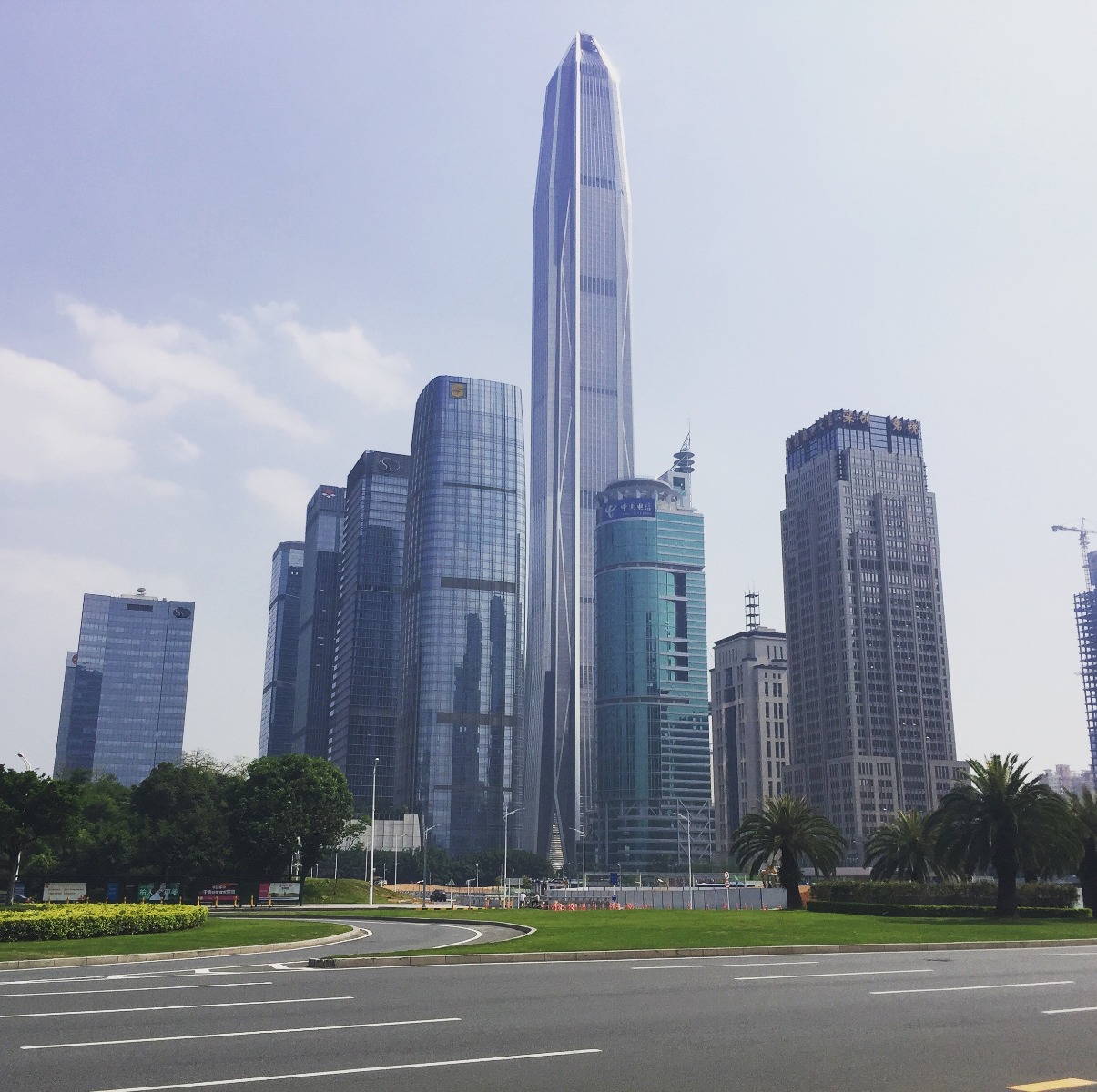 I remember seeing the Chinese city of Shenzhen when it was a small sleepy town surrounded by rice paddies less than forty years ago. Now it is a teeming city of ten million or more - and probably the most digitised urban area on the planet. But Shenzhen is not unique: the fact is that urbanisation is becoming the normal life experience of us all. And it always changes humans: it connects us in new ways, it empowers individuals as never before (it is, for example, freeing women to be themselves for the first time in human history).
Urbanisation is a one-way street: neither economically nor psychologically will it be possible to reabsorb any significant numbers of people into the rural world that was so familiar to all previous generations. Three huge challenges are posed by this change. First: the social fluidity of the modern city raises questions about identity and value. Who are we now - now that our self-understanding is no longer shaped by time-honoured custom? Second: were the nineteenth century Romantics right to be troubled by the loss of empathy for the natural environment? Does being cut off from nature impoverish the human spirit? And thirdly: in a crowded urban world, we face the problem of the commons. Our planet is less and less able to cope with us. How will we measure up to the challenge of our shared dependence on a fragile environment, such that people and planet can thrive?
Extract from The Human Odyssey
From one end of Eurasia to the other, societies are now either already highly urbanized or in the process of becoming so. We do not yet fully understand the implications of this for modern societies and for the individual. Already the transformation is dramatic: slowly but inexorably, urbanization is – to highlight one of its most fundamental effects – bringing about the empowerment of women (a phenomenon of our times that is so profound and wide-ranging in its effects that it is beyond the scope of this book to explore fully). This most radical of changes is still not complete even in the most developed societies; and there is a long journey ahead. But one bastion of male privilege after another is being undermined and then brought down, and half the world’s population is gradually being freed to make their own life choices. No culture will remain immune to this incoming tide.
Simultaneously, the role of cities is continuing to change: from the pre-modern era when cities were centres of power and culture but their rural surroundings were the main base for (agricultural) production; to the industrial era when cities themselves became production centres of much greater economic value than the countryside (and underwent rad- ical transformation as a result); to the era of offices and commuters (who may live in semi-rural settings but whose lives are dominated by their urban working environment); to a new era already dawning when the digital revolution in general, and artificial intelligence in particular, will change city profiles yet again, making more and more shop-floor and office jobs unnecessary.
We know that artificial intelligence will close the path towards affluence which has been followed since the Second World War by so many countries (from Japan in the 1950s to China in the 1990s) by removing the cost advantage of cheap and efficient labour, as it makes more and more low-skilled jobs simply unnecessary. We also know from the experience in mature European economies how hard it is to manage urban decline due to the death of old industries. At the same time, we know too that urbanization is a one-way street: neither economically nor sociopsychologically will it be possible for any significant numbers of people to be reabsorbed into the rural world. Indeed, the drift to the cities will continue everywhere except in very mature societies such as in western Europe and Japan where urbanization is already largely complete (and where rural life has effectively been ‘urbanized’ by the ease of transport and by the intense connectivity of the digital era, such that there are very few pockets left of old rural ways and attitudes).
Three huge common challenges are predictable in this context. First, the social fluidity of the modern city poses questions about identity and value for individuals. This is the real issue underlying the alienation that so troubled Smith and Marx. As they perceived it, alienation was the product of the technology of production; but regimentation is receding as an important mode of social organization, in either economic or in political life. Fluidity rather than structure is becoming the dominant characteristic of urban life, so the question that becomes ever more insistent everywhere – from Shenzhen to London – is a new and deeper one. But the exact form of the question – is it, ‘Who am I now?’ or is it, ‘Who are we now?’ – begs its own question. Another question is also becoming more insistent: are the answers basically the same in all modern urban cultural environments or do the answers vary from one culture to another?
Second, were the Romantics right to be troubled by the loss of empathy for the natural environment? Was this just a European preoccupation of nineteenth-century literati and aesthetes yearning for something so recently found and then lost again? Or does urbanization pose a deeper and more general threat to human well-being in all societies as they modernize? If so, what impact does it have on the great cultures of Eurasia?
That question about the human spirit and its natural context opens out into a third and wider concern: in a crowded and increasingly urban world, we face the problem of the commons. The human impact on the planet was felt first in Eurasia. It was Eurasians who first hunted animals to extinction; it was they who first made the move from hunting to agriculture and who first cleared the primeval forests. For nearly two centuries they have produced the most urban pollution. They have had the largest impact on the oceans through overfishing and now through plastic pollution, and on the climate through their carbon emissions. Increasingly, this problem of the commons is one that the Eurasians share, not only among themselves but also with the wider world. How will we measure up to this challenge, and what will be the implications for the development of the human spirit as manifested in the great world cultures that have their roots in Eurasia?
These questions are for the rest of this book. As we explore them, we will find ourselves facing one other question: does the connected urbanization, which is becoming the reality of life experience for us all, create in the end a deeper commonality than we have so far known – and what would this mean for those great Eurasian cultural traditions that have been the pathways of the journey of the human spirit so far?
Next, then, the question about urbanization and the human spirit. What is all the new social fluidity doing to our self-awareness? Who do we now think we are?

The Human Odyssey publishes on 19th September 2019. Pre-order your copy here >>
Related Posts
Categories
Recent Posts
1

Thoughtful Christian Books for Father’s Day
11 Jun 2026
5
Support SPCK with your donation
Either donate with a one-off donation or subscribe monthly.
Choose a type of donation
I want to donate
 I want to donate