





 I want to donate
10 individuals who risked their lives in the Holocaust
- Emma Collins
- New Releases
- 27 Jan 2020
-
93views

Holocaust Memorial Day is held on 27th January each year and is dedicated to the remembrance of those who suffered in the Holocaust.
Author and historian Tim Dowley has recently written a book which tells the stories of 10 individuals who risked their lives to protect and rescue Jews from the Holocaust. This book is called Defying the Holocaust: Ten courageous Christians who supported Jews. Below is an introductory extract from the book.
---
When the Nazis started to destroy the European Jews, the millions of non-Jews in Europe had to decide their stance: would they help the Nazis, help the Jews, or do nothing. A very small percentage resisted or helped. The great majority did nothing. More than 16,000 rescuers have been recognized officially by Yad Vashem in Jerusalem, yet no one knows how many there were in total.
The number of those who escaped the Holocaust by living illegally with the aid and support of non-Jews is extremely low in comparison with the number deported to the extermination camps. For example, in Berlin some Gentiles were ready and able to risk rescuing Jews, although they were very few compared with those who remained indifferent, looked the other way, became accomplices by denouncing people to the police or actively participated in the Holocaust.
It has often been wrongly assumed that all rescuers were Christian. In fact some were atheists or agnostics, some in south-eastern Europe were Muslims, and dedicated Communists also rescued Jews. Some rescuers had a Jewish friend, co-worker or colleague whom they wanted to help. Some were motivated by patriotism or politics: for example, the Danes aided the Jews of their country partly as an act of national resistance to the Nazis. Many of the rescuers acted out of a sense of justice or in straightforward response to the suffering of fellow humans.
Of the tiny minority who rescued Jews for explicitly Christian reasons, some did so from a particular sense of religious kinship, a sort of Christian philo-Semitism, apparently more often found among those within Calvinist traditions. Some Christians rescued Jews in response to the Bible’s teaching on compassion, love and justice – for instance the story of the Good Samaritan, or the commandment to love God and one’s neighbour – applying these precepts to the dreadful contemporary events. Some Christian leaders denounced the evils of Nazism and its murderous policies, teaching that it was a heresy, and inspiring Christians to participate in rescue activities. Most explicitly Christian rescuers were markedly devout.
It is risky to generalize from the small number of men and women whose stories have been selected for this book. However, it seems noteworthy that many were unmarried (several because they had taken a vow of celibacy); that a number were women; and that, apart from their astonishing acts of individual courage and initiative, most would probably not have found a place in history. The Polish philosopher Zygmunt Bauman (1925–2017) underlined this insight: ‘were it not for the Holocaust, most of these helpers might have continued on their independent paths, some pursuing charitable actions, some leading simple, unobtrusive lives. They were dormant heroes, often indistinguishable from those around them.’ Nechama Tec (1931– ), herself a Holocaust survivor, has suggested that many of the helpers were not motivated so much by altruism as by an unusual degree of independence: ‘indi- viduality and separateness from their environment’.
Almost all seem to have combined a steely strength of character with a certain contrariness and a warm humanity.
All the people whose stories are told in this book showed strong moral principles and lived by what they regarded as traditional Christian standards, probably with greater conscientiousness than many. Yet counterintuitively, when faced with the stark realities of Nazi cruelty and power, they surprised even themselves by contravening what previously they would have regarded as laws set in stone. For instance a Dutch rescuer named Marion Pritchard, née van Binsbergen, reckoned that, by the end of the war, she had ‘killed, stolen, lied, everything. I had broken every one of the Ten Commandments, except maybe the first’. Corrie ten Boom, whose story is told in Chapter 4, said much the same thing. As for why she helped, Pritchard claimed, ‘I didn’t think about it. I just did it.’ Similarly Father Bruno, whose story is told in Chapter 7, said, ‘I just did what I’m supposed to do.’
The Dutch Christian Joop Westerweel, who with his ‘Westerweel group’ succeeded in smuggling between 200 and 300 Jews across Belgium and France to neutral Switzerland and Spain, and who was executed by the Nazis on 11 August 1944, argued for action rather than debate, quoting Matthew 10.37–39:
Whoever loves father or mother more than me is not worthy of me; and whoever loves son or daughter more than me is not worthy of me; and whoever does not take up the cross and follow me is not worthy of me. Those who find their life will lose it, and those who lose their life for my sake will find it. (nrsv)
He and his wife, Wilhelmina, left their four children in the care of foster parents while they engaged in rescue work. In reading these stories, it is important to keep the numbers of Christian rescuers in perspective. ‘Some Christians did choose to stand with suffering Jews in the Holocaust. Many more Christians, however, chose to stare silently away from the flames while embracing twenty centuries of anti-Jewish theology.’
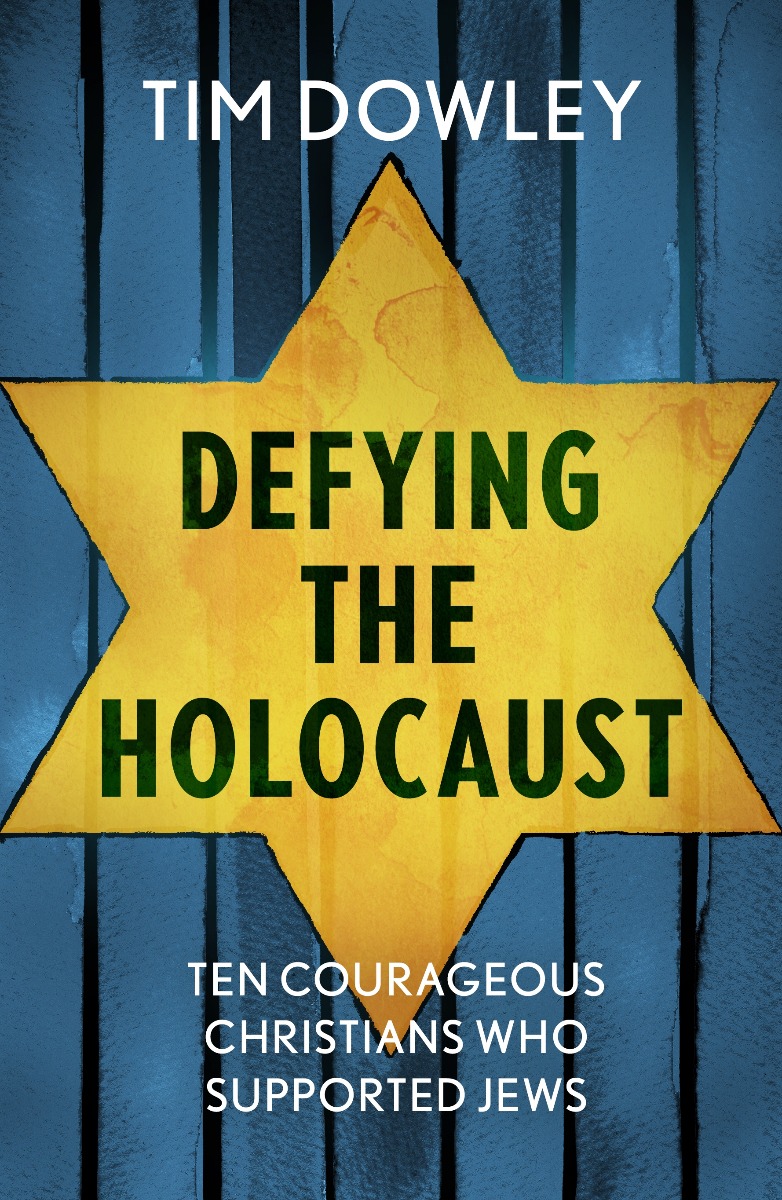
During the Second World War, Christians from many nations and denominations stepped forward with courage, ingenuity and determination to protect and rescue Jews from the Holocaust. In doing so they risked their lives, and many died. Some, such as Corrie ten Boom, are celebrated, but most have been ignored. Historian Tim Dowley tells ten stories of these extraordinary women and men.
Related Posts
Categories
Recent Posts
1

UK Launch of Called to Care by Jo Knight
28 May 2026
5
Support SPCK with your donation
Either donate with a one-off donation or subscribe monthly.
Choose a type of donation
I want to donate
 I want to donate