




 I want to donate
"I have no tendency to be a saint" (John Henry Newman)
- Emma Collins
- New Releases
- 7 Oct 2019
-
131views
 In 1850 Newman admonished one of his female correspondents against taking him for a saint: ‘I have no tendency to be a saint – it is a sad thing to say, Saints are not literary men, they do not love the classics, they do not write Tales.’ It is a matter of interest that Newman in 1850 should think of himself as ‘a literary man’. He had of course taught classics in Oxford, and the ‘Tale’ he refers to was his semi- autobiographical novel, Loss and Gain: the story of a convert, conceived while he was living in Rome, with the memory of his own conversion still strong upon him, and which was published anonymously in 1848. He had immediately begun another ‘tale’, this time an historical novel, Callista, set in third century ProConsular Africa. Callista was remarkable both for its vivid evocation of the plague of locusts which devastates the fictional city of Sicca in chapter ten, and for his heroine Callista’s appeal, while still a pagan, to the voice of God in her conscience, ‘the echo of a person speaking to me’ that ‘carries with it its proof of its divine origin ... An echo implies a voice; a voice a speaker. That speaker I love and I fear’, a key element of Newman’s thought, which he was to explore more formally in the Grammar of Assent and the Letter to the Duke of Norfolk. Both novels still have life, and Loss and Gain is often very funny in a sub-Dickensian way, but Newman was by any measure only a minor novelist.
There is more to be said for him as a poet: the novels are read primarily for the light they throw on Newman, but The Pillar of the Cloud, written aboard ship during his voyage back to England from Sicily in June 1833, has become one of the small handful of hymns that everyone has heard of, as ‘Lead kindly light’. His most sustained poetic achievement, The Dream of Gerontius, written and published in 1865, is one of the best Victorian religious poems, theologically daring in its highly unconventional depiction of Purgatory as essentially the unfolding within the soul of Gerontius of his encounter with the holiness of God. The poem is metrically adventurous, and full of memorable phrasing, like Gerontius’s description of the pangs of death:
I can no more; for now it comes again,
That sense of ruin, which is worse than pain,
That masterful negation and collapse
Of all that makes me man.
The poem is also theologically adventurous, for, unlike most Victorian Catholic evocations of Purgatory, Newman’s Purgatory is a ‘golden prison’, a place of healing and restoration. There is no fire there, and the bitterness of the ‘penal waters’ into which Gerontius’ Guardian Angel lowers him ‘softly and gently’, to be tended and ‘nursed’ by willing angels, is the pain of penitence rather than of punishment. All the same, the Dream is as much a product of late romantic sensibility as of theological penetration. In the greatest of all poetic evocations of the Christian afterlife, Dante’s Commedia, the vision of Purgatory is emphatically social, penitence and community are its twin themes, and the cleansing that takes place there involves the restoration of the justice and right order that sin destroys. By contrast, Gerontius in purgatory is ‘lone, not forlorn’, sinking far from all company into the lake of purgation, ‘deeper, deeper into the dim distance’ till the ‘lone night watches’ end, and the soul flies at last to ‘its Sole Peace’. Here, as always in Newman, there are two and two only ‘absolute and luminously self-evident beings, myself and my Creator’. It demanded musical setting, and Elgar’s sublime oratorio, which, as he famously declared, was ‘the best of me’ has ensured that Newman’s sombrely beautiful meditation on the death, purgation and ultimate salvation of the soul of an ordinary man is one of the best-known of all Victorian poems. Two choruses from it, ‘Praise to the Holiest’ and ‘Firmly I believe and truly’ took on a life of their own in other musical settings, and rival the status of ‘Lead kindly light’ as classics of English hymnody. Despite a disastrously bad premier in Birmingham Town Hall in 1900, Elgar’s work was soon recognized for the masterpiece that it is, though the blatantly Roman Catholic subject-matter raised Protestant hackles: to begin with it had to be performed at the Three Choirs Festival in a bowdlerized version.
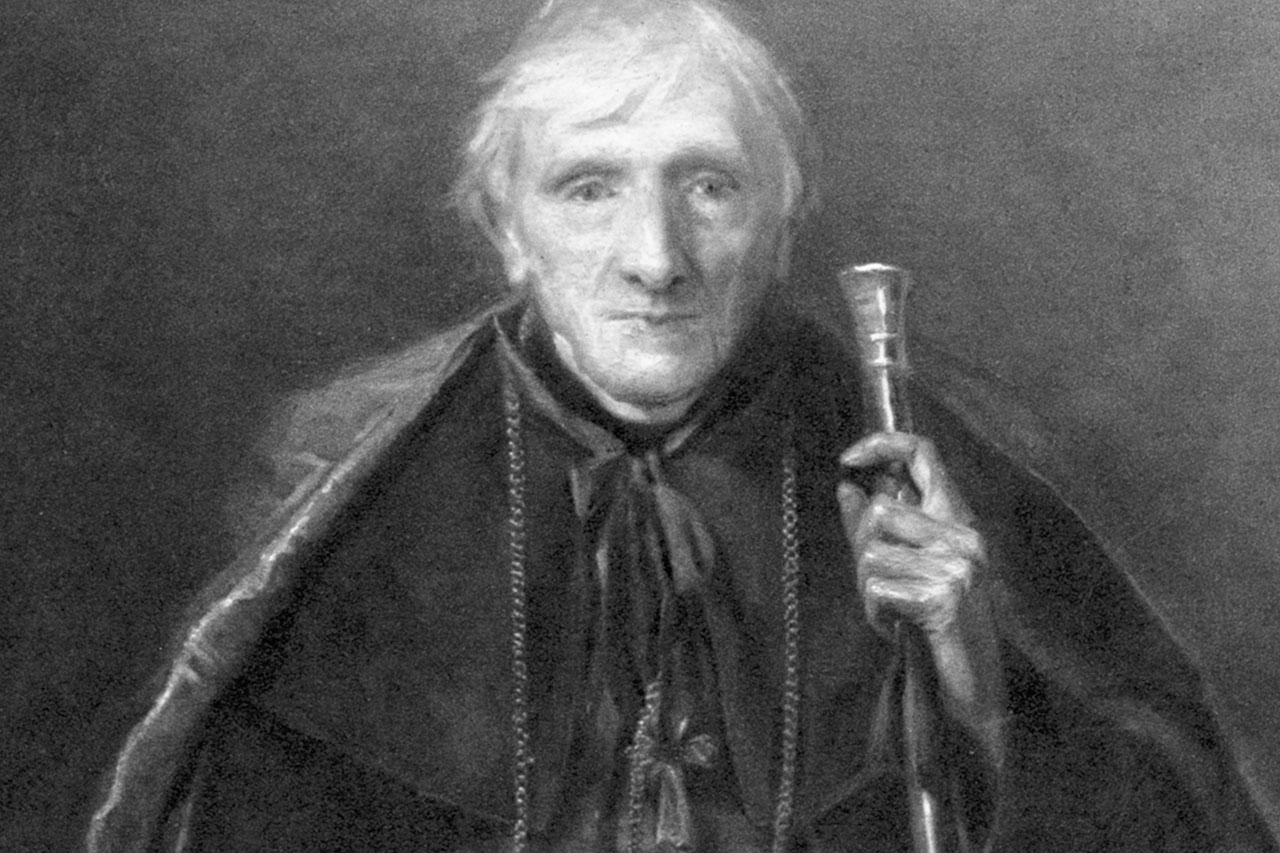
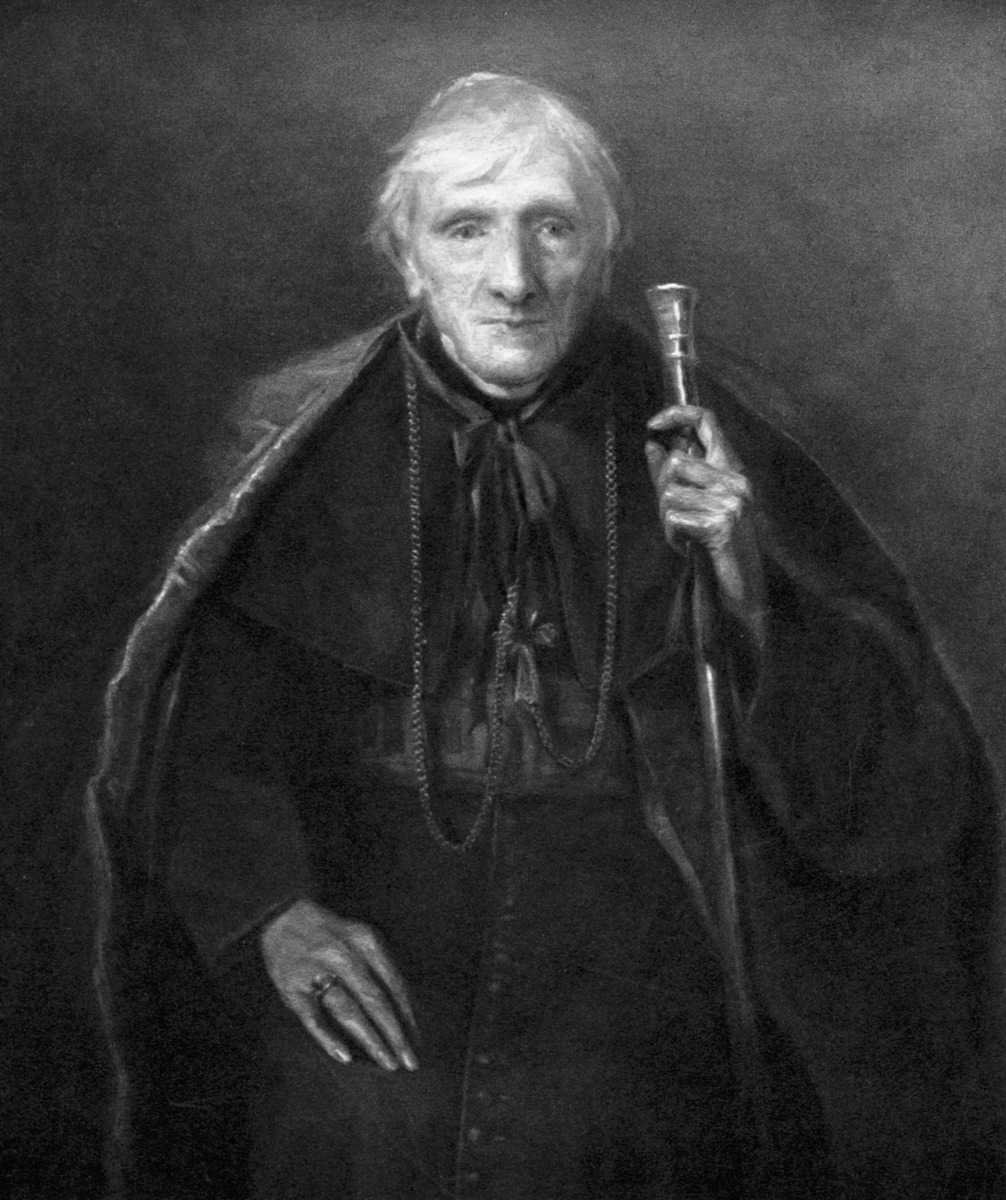
Portrait of John Henry Newman © Getty Images
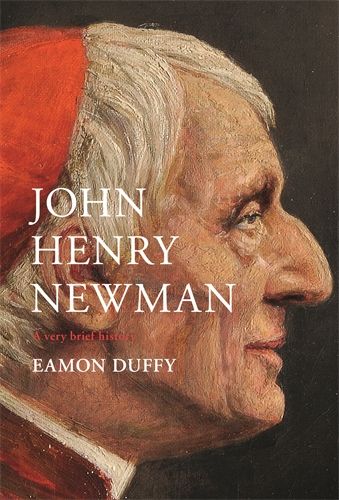 Saint John Henry Newman was one of the most controversial and influential thinkers of his day, and his many writings have remained highly influential since his death in August 1890. He is also widely regarded as one of the finest prose stylists of modern times, as well as a popular poet and hymn-writer. Published to coincide with Newman’s canonization by Pope Francis in October 2019, this engaging and judicious introduction to Newman’s life and legacy will be welcomed by newcomers and seasoned enthusiasts alike.
Related Posts
Categories
Recent Posts
1

Thoughtful Christian Books for Father’s Day
11 Jun 2026
5
Support SPCK with your donation
Either donate with a one-off donation or subscribe monthly.
Choose a type of donation
I want to donate
 I want to donate