



 I want to donate
How Talk Can Transform Us
- Emma Collins
- 5 Minutes With . . .
- 30 Jun 2020
-
95views

 In Conversation: How Talk Can Transform Us
Two summers ago, my dear friend Rowan Williams and I sat down in his study at Magdalene College, Cambridge to record a series of conversations about faith, family, friendship, politics, art, literature, and popular culture. The idea of talking to someone for eight hours might have been daunting for some people, but this is what Rowan and I have been doing for more than a decade. It is all we do. We don’t watch Premier League football together, or dissect Love Island, or laugh at punters from Scudamore’s Quayside slamming into the bank under the Magdalene Bridge. As funny as that actually is. We talk, and my life is so much the better for it.
Back when he was Archbishop of Canterbury, Rowan Williams—at that time, my favorite living theologian—read my spiritual autobiography Crossing Myself and invited me to come have tea with him at Lambeth Palace the next time I was in England. When we met in his study at Lambeth, dotted by icons and packed with books, we didn’t talk about the state of the Anglican Communion (although I was then a postulant for holy orders in the American Episcopal Church), but rather we visited about great novels and art and popular culture. Rowan knew I had written several decently-reviewed literary novels, and that I was deeply invested in writing about the relationship between faith and culture in artifacts like Hollywood films and superhero comics and the music of U2.
What happened that afternoon in Lambeth is that two writers and thinkers engaged on a deep level having nothing to do with the formal church we both loved and served. Rowan and I connected as human beings, and I began to think of him even then as a dear friend. I realized that while he was perhaps the smartest human being with whom I had ever been in a room, he was also perhaps the kindest, and one of the most deeply spiritual. Conversation with Rowan Williams was a way of learning about myself, and him, and about the world outside us. It was a gift I resolved never to take for granted.
When I got home, my friends back in the States were deep emerald with envy, and they talked about how they wished they could overhear our dialogue. In later years, every time I came over to the UK to do media or write, I would visit with Rowan and his family, staying with him for the weekend in Canterbury or coming to stay with him in Cambridge after he became Master of Magdalene. During those visits, we talked about our lives, our work, and the art that was moving us. He prayed with me as I thought about remarrying, he welcomed my son and my bride-to-be, and in between visits, we emailed long missives such as people once put in mailboxes.
When Church Publishing, the publisher for the American Episcopal Church, asked me if I thought that Rowan might want to collaborate on a book for their In Conversation series, I was skeptical. I talk often with Rowan’s PA, and I know that he is always scheduled far into the future. And although I’ve wanted to collaborate with him for years, I also, frankly, did not want to sully our deep and sincere dialogue over a professional project. But my editor at Church Publishing, Nancy Bryan, met with Rowan when he was giving an endowed lecture in the States and sold him on the project, and we began to think of it not as an imposition, but as an opportunity for us to have additional time together.
Instead of the one day I usually visited him in Cambridge, in 2018 we scheduled three days, and even with the inevitable interruptions for Rowan’s lectures out of town and my media appearances for a new book, we were able to set aside eight hours for a series of curated conversations about all the things we care about.
Rowan had a list of things he wanted to discuss; I had my set. We began with conversation about how we met and our growing friendship, I asked questions about Rowan’s spiritual practice, and then we launched into deeper conversations. Over three days we returned to many things we’d discussed in the past, including faithful politics, Shakespeare, writing practice, preaching, and the role of the Church. But we also found many new things emerging out of those conversations, for that is what real conversation does.
When you speak to someone with respect, when you actually listen, when you come into a conversation open to change, expecting to learn, and hoping to be moved, you very well may find all those things happening. While in some ways Rowan Williams: In Conversation feels like a greatest hits album, it also feels like one of those classic albums re-recorded or re-mastered a few years ago by Yes or the Beatles or R.E.M. In these conversations on topics Rowan and I have discussed for many years, we also come to new insights, inspire new reflection in each other, and, I hope, encourage our readers (listeners?) to think and read and watch and listen and love more profoundly.
In one sense, the conversation book with Rowan Williams is the simplest book either of us has ever published. But in another, it is the culmination of everything we have written, everything we have spoken, everything we have preached. If you (as Randall Hollerith, the Dean of Washington National Cathedral says) want to be a fly on the wall as two dear friends who also happen to be prolific writers talk about the things that matter most to them, this is ground zero. Come and join us for a conversation that will spark important conversations of your own.
Greg Garrett is Professor of English at Baylor University in Texas, Theologian in Residence at the American Cathedral in Paris, and the author or co-author of more than two dozen books, including Rowan Williams: In Conversation (SPCK) and A Long, Long Way: Hollywood's Unfinished Journey from Racism to Reconciliation (Oxford University Press).
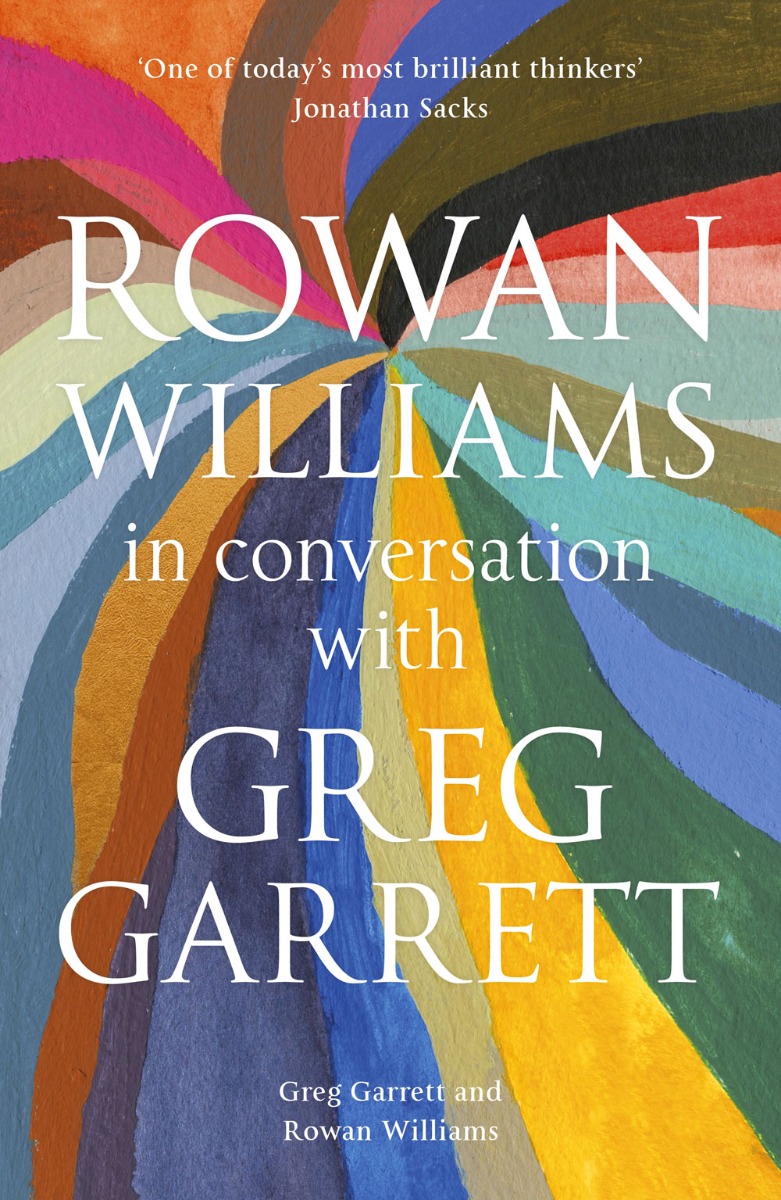 Be a fly on the wall as two friends – one the former Archbishop of Canterbury, the other ‘one of America's leading voices on religion and culture’ (BBC Radio) – talk about their shared passions and interests.
Related Posts
Categories
Recent Posts
4
5
Our Royal Patron in Congress
29 Apr 2026
Support SPCK with your donation
Either donate with a one-off donation or subscribe monthly.
Choose a type of donation
I want to donate
 I want to donate