




 I want to donate
Guest Post: SPCK Author Natalie Collins
- Laura Barry
- Blog
- 25 Nov 2024
-
346views

Today is International Day for the Elimination of Violence Against Women. This marks the launch of the United Nations UNiTE campaign (Nov 25-Dec 10) — an initiative of 16 days of activism concluding on the day that commemorates the International Human Rights Day (10 December).
This 2024 campaign Every 10 Minutes, a woman is killed. #NoExcuse. UNiTE to End Violence against Women will draw attention to the alarming escalation of violence against women to revitalize commitments, call for accountability and action from decision-makers.
On this important day, Natalie Collins, author of Out of Control, writes about the urgency to end men's violence against women and her own story detailed in Out of Control.
Natalie Collins has been working to address domestic abuse issues for over a decade, working directly with women subjected to abuse and domestic abuse perpetrators, and training ordinands, church leaders and congregations on domestic abuse issues. She has delivered keynote addresses both nationally and internationally on the subject, and has spoken alongside Archbishops and UN representatives. Natalie is also the founder of the ‘Fifty Shades is Domestic Abuse’ campaign and has appeared on national television, radio and printed media talking about abuse, consent and women’s rights. She is the author of Out of Control - a fully comprehensive book on domestic abuse, offering theological content, personal story and practical advice. She has further written several articles and book contributions on domestic violence, and is the author of the widely used domestic abuse pack for UK churches, the Restored Church Pack.
Read Natalie's inspiring blog post below.
In church, at social gatherings and as part of wider work networks, there will be an opportunity to tell people about my work. I will explain my commitment to ending men’s violence towards women and how Own My Life, the charity I run, works to do this. Inevitably, my interlocutor will assume I am a serious sort of person, probably quite mournful and depressed, given the severity of the issues I am working to address. As I explain my work, I find myself assuring them that I am actually a very FUN person, and that mine is a work filled with joy.
When I wrote Out Of Control; Couples, conflict and the capacity for change, I intended to share my own story of being subjected to abuse at the end of the book. I find that often, sharing my proximity to abuse leaves me being viewed with suspicion. Instead of being afforded extra credibility, I am seen as less competent, For some, I sit in the category of “those women”; weak, broken and fragile. Generally, I take time to gain an audience’s trust and confidence in my objective knowledge before I share that I also have subjective knowledge, borne through brutal personal experience.
And yet, as I started to write Out Of Control, I found that my tone was at odds with what people would expect from a book about abuse. It was light and airy. I made jokes and wanted the reader to laugh along with me. I realised then that my story couldn’t wait until the end. The reader might consider me callous or flippant, not taking seriously the awfulness of the topic. And so I wove my story throughout the book.
Abusive men demand their partners do what they want. They view their partner as weak and pathetic. They drain her life of joy and hope, isolating her from friends and family, manipulating or forcing her to betray her values. These men use their children as a weapon in a meaningless war that exists solely for him to get whatever he wants. And for those external to the man and his partner, this may be almost unnoticeable. They may see this as a lovely couple; they may see him as a charming, kind man. Particularly if he is their church leader or a key member of the congregation.
It is in light of the fact abusers drain the joy from life that I believe on every day, but most especially on the International Day for the Elimination of Violence Against Women (which falls each year on 25th November) we must understand the work of eliminating men’s violence as requiring us to create joy-filled, hopeful spaces; where women (and their children) who are harmed by abusive men are seen as fully formed human beings, capable of resistance as well as distress, and who are mostly doing the best for the children and themselves in the midst of an impossible situation, created solely by the abusive man in his demands to possess and control his partner.
We need to take seriously the reality that a quarter of women will be subjected to abuse by a partner, and that amongst those harmed will be our friends, mothers, sisters, colleagues, church leaders and the other mothers at our children’s school gates. Yet, if we assume that those who are harmed will be visible in their misery and distress, we will miss the majority of those who are being harmed. Instead, we can seek to bring joy to our communities, workplaces, friendships, churches and family. We can be generous with our time and resources, and make ourselves available in openness and care. In doing so, we ensure that abusive men do not get to set the tone or reality of how women and their children survive and thrive. And we show those who may be hurting that a different world is possible.
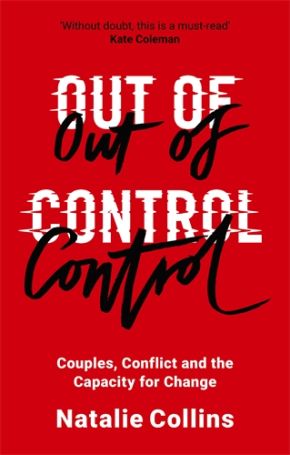
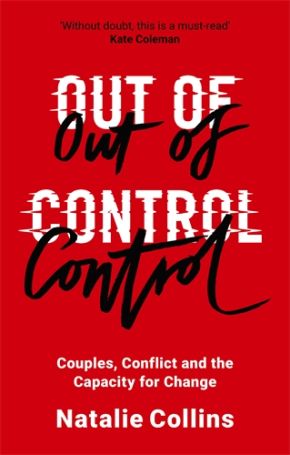
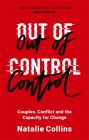
Out of Control
By Natalie Collins
All of us will be familiar with supporting friends, family and colleagues through the ups and downs of relationships. But could some of the more difficult times of argument and conflict be more than general relationship issues? Is there something more sinister going on?
Over the course of a lifetime, 30% of women and 16% of men will be subjected to abuse by a partner, yet so many of us are unsure exactly what constitutes domestic abuse, and wouldn't know how to react if we, or one of our friends or family, found ourselves in a relationship with an abuser.
Natalie Collins is the perfect guide to lead you through this subject, amassing over a decade's experience leading workshops, raising awareness and capturing national media attention in her work against domestic abuse.
Highly readable, invaluably insightful and steeped in theological insight, Natalie starts right from the basics, exploring what domestic abuse is, why it is perpetrated and the impact it has on children and adults. Filled with case studies, including Natalie's own story, this book offers much-needed advice on how we can address domestic abuse, both as individuals and as a church community.
Over the course of a lifetime, 30% of women and 16% of men will be subjected to abuse by a partner, yet so many of us are unsure exactly what constitutes domestic abuse, and wouldn't know how to react if we, or one of our friends or family, found ourselves in a relationship with an abuser.
Natalie Collins is the perfect guide to lead you through this subject, amassing over a decade's experience leading workshops, raising awareness and capturing national media attention in her work against domestic abuse.
Highly readable, invaluably insightful and steeped in theological insight, Natalie starts right from the basics, exploring what domestic abuse is, why it is perpetrated and the impact it has on children and adults. Filled with case studies, including Natalie's own story, this book offers much-needed advice on how we can address domestic abuse, both as individuals and as a church community.
Press Reviews For Out of Control:
'No-one who has met Natalie Collins will be surprised at this book. It is authentically hers, full of energy, insight, quirks and personal narrative. Few people can pepper a serious, even scholarly, book on domestic abuse with comments that leave you laughing out loud! But finding humour in tragedy is Natalie’s great gift, as is her refusal to be cowed by what she has gone through. This book is both realistic and hopeful, opening a window on abusers and abused, not least by Natalie’s personification of the ‘tactics of torture.’ The profiles of abusing partners, and the struggles of those who suffer will be soberly familiar to many. Written with Christian wisdom and vigour, Natalie’s up to date, well-researched, and ‘must-read’ book challenges us all to work ever harder towards the eradication of violence against women.'
'Out of Control is a call to action; at times funny, touching, insightful, challenging and profoundly disturbing… without doubt this is a must read for every church leader.'
'When I first began to review books, two decades ago, I was a jobbing pastor, and took a vow that I would never write ‘every pastor should read this book’—the life is too busy, and too varied, for that ever to be true. Or so I thought. Today I repent: every pastor should read Natalie Collins’s book, and should give it to their leaders to read as well. Domestic violence is an enormous hidden plague that infects every community, and every congregation, in the land, and Natalie exposes the reality of this, and points to practical steps we can all take to help.'
'Even better, Natalie communicates out of deep expertise, but simply, even colloquially. And all her passion, all her hope, all her joy, all her humour, are present in this book. It is a magnificent achievement, and it matters. Read it!'
'The book is well-researched and accessibly written. It is full of information which would be useful for those in abusive relationships, those who seek to intervene in such relationships, and those who ought to be intervening – such as church leaders. As a survivor of domestic abuse, Collins speaks with clarity and honesty about her own story.'
'I can’t merely describe this as informative, well-researched and practical. It’s also jarring and prophetic. Equally, to take such suffering, face it down, push back against it and raise a prophetic cry for others to hear, is nothing short of heroic. This book oozes with courage, wisdom and hope.'
'Bottom line: Collins has written a much needed, must-read for anybody who’s interested in creating and curating a better world.'
Related Posts
Related Products
Out of Control
From £14.99
Categories
Recent Posts
1

Thoughtful Christian Books for Father’s Day
11 Jun 2026
5
Support SPCK with your donation
Either donate with a one-off donation or subscribe monthly.
Choose a type of donation
I want to donate
 I want to donate