


 I want to donate
Amy Scott Robinson Discusses her Adventuring Girls series
- Laura Barry
- General
- 6 Apr 2023
-
37views

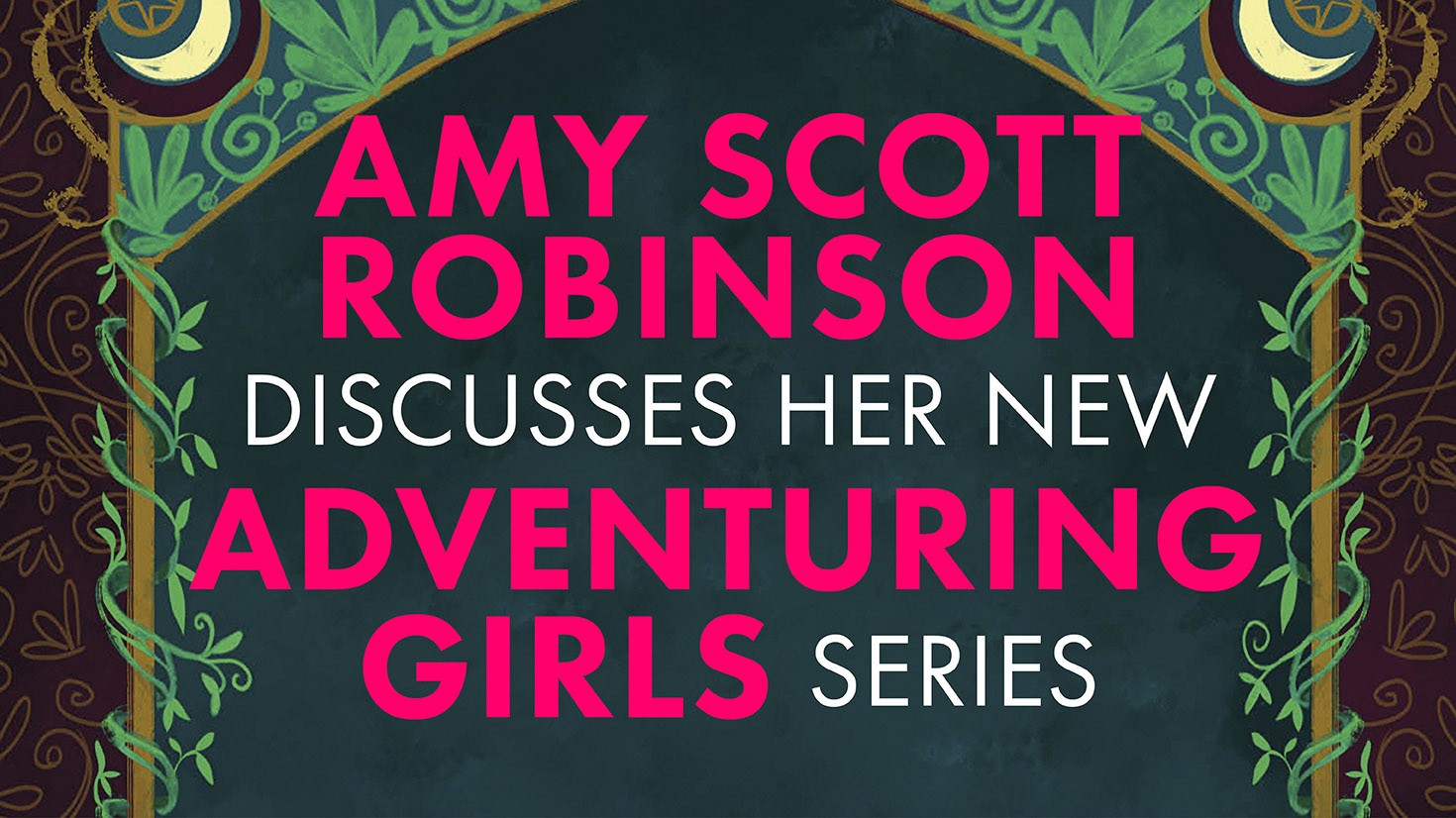
Amy Scott Robinson is a performance storyteller and author of The Adventuring Girls series that include: Queen Esther, Nation Saver and Lousia Freya, Dragon Slayer.
Both books feature courageous girls who inspire young readers with their stories of fears faced, and expectations and obstacles overcome.
Below Amy shares her love of fairytales and what she hoped to achieve by writing the Adventuring Girls series.
Should we stop telling our little girls fairytales?
If you believe recent media, the answer is yes. Traditional tales contain too many silent, nameless princesses whose only asset is their beauty, whose goodness of character only comes across in submission, and whose only future is marriage. To replace fairytales, a number of very beautiful books have been produced which tell the stories of real women from history and their strength, bravery and cleverness.
These are very worthy stories, but as a traditional performance storyteller I know that something is missing from that approach. For a start, what they say about fairytales just isn’t true. It may be that the handful of tales which have become well-known to our corner of the world have some rather insipid princesses in them, but traditional tales from many other cultures and times are full of strong female characters - in fact, my experience has been that the further back you go in a tale’s history, the stronger the girl at the centre of that tale becomes. Secondly, why should boys be the only ones to get all the excitement of magic, dragons, ogres and fantasy landscapes? So I set out with Adventuring Girls to find and retell some traditional tales featuring women and girls that I’d be proud to take after.
What was important to you when telling the Adventuring Girls series?
1. The heroines would have to be in charge of their own destinies, making their own decisions, not just being swept along in the story.
Some people might object to the number of marriages in this book, but most princes in fairytales end up getting married as well: there is nothing wrong with marriage itself, only with the idea that it’s the only option for a girl. So some of the women in these stories end up getting married, and others don’t, but they always make up their own minds about it. I wanted to make sure that there was a moment in every story where the heroine would face up to the enemy, shoulders square and chin held high, and take control. Those moments may not always be where you expect to find them: for example, Louisa Freya faces a dragon, but her real moment comes at the end of her story with her stubborn and joyful shout of ‘Nonsense!’ from the town gate. The enemy that Clumsy Scarface faces is her own past and future, while Abigail has her moment facing an enemy she eventually marries. Perhaps you will be able to spot those moments in the other stories too.
2. All the girls in the stories should have names.
It’s very usual in a fairytale for even the central character to go without a name, or to be called after some physical aspect or circumstance (think of ‘Goldilocks’ and ‘Cinderella’). It's difficult to identify with an anonymous character, and hard to remember her and retell the story, too. So where a heroine was nameless, I have named her, and I’ve tried to choose a name that fits with the culture of the story and is also meaningful.
3. The stories should be fun, with things that are amusing or a bit quirky.
I certainly didn’t want to write some arduous reproduction of the Brothers Grimm, or even of the many-coloured Fairy Books I loved when I was little. A wise storyteller once told me that a traditional tale is like a flowing river: every time you come across it, although it’s the same story, not a drop within it has stayed still. When those wonderful old collectors of fairytales wrote them down so that they would not be lost, it was like taking a picture of a river in just one moment of its life. It had never been exactly that way since and will never be exactly that way again. So you can either read Grimm or Perrault, and see what the story was like then, or you can meet the story where it is now and tell it that way. That’s what I have tried to do, and I really hope you enjoy reading these new ancient tales of adventuring girls.
This week we're offering 20% OFF Queen Esther, Nation Saver and Lousia Freya, Dragon Slayer until April 16th.
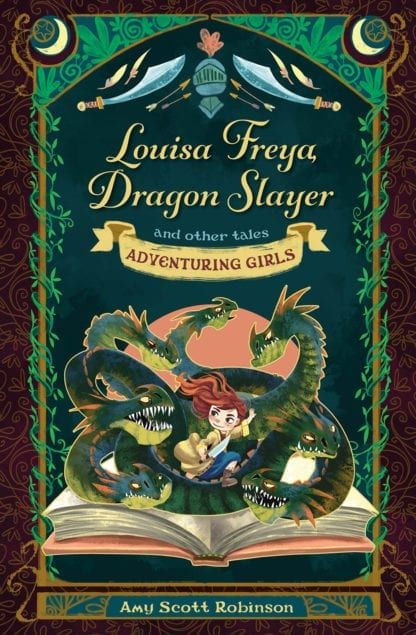 |
Louisa Freya, Dragon SlayerBy Amy Scott Robinson Folk tales are stories full of adventure, courage, daring, fighting dragons, trolls, These twelve folk tales from all over the world have been specially selected as they feature Meet Louisa Freya, the brave dragon slayer, funny and clever Sigrun, and honest and These folk tales deserve to be told as often as the more famous and well-known ones. Enjoy the adventure! BUY HERE |
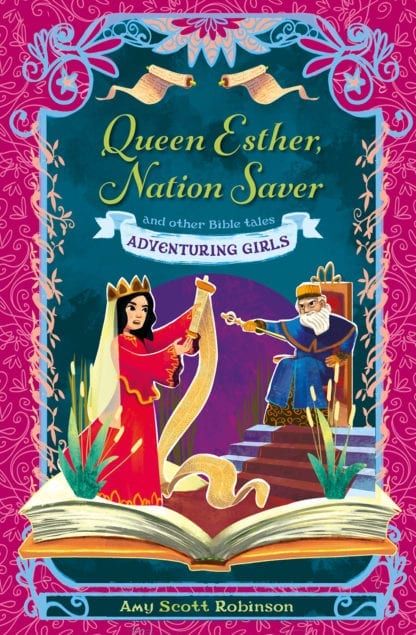 |
|
About Amy Scott Robinson:
Amy Scott Robinson is an author and performance storyteller. She is the author of Louisa Freya, Dragon Slayer and Queen Esther, Nation Saver. After studying English at Christ’s College, Cambridge, she trained as a primary school teacher and then founded a business for storytelling in education. Amy began writing scripts and poetry for charities, churches and providers of liturgical resources, before publishing her own works on puppetry and story. She still performs as a storyteller and ventriloquist, and produces works for adults as well as children. She lives in a rectory in Suffolk with the Rector, two children and lots of puppets.
Related Posts
Categories
Recent Posts
4
5
Our Royal Patron in Congress
29 Apr 2026
Support SPCK with your donation
Either donate with a one-off donation or subscribe monthly.
Choose a type of donation
I want to donate
 I want to donate