




 I want to donate
A chat with Sharon Moughtin-Mumby of Diddy Disciples
- General
- 27 Jul 2018
-
332views
How did Diddy Disciples start?
I was a professional Bible scholar and priest in a parish near the Elephant and Castle in Central London. Then I had three children within 14 months! Ana, Joy, and Zoe were wriggly, chatty, and bursting with energy: exactly how toddlers should be. But hard to balance with leading services on Sundays in church! So Diddy Disciples was an act of survival! The idea was that I’d soon get back to the ‘real job’ of being an academic and priest leading worship for adults. But I never did. I soon realized that, for me, this WAS the real thing!
Diddy Disciples is real worship and real Bible engagement with children. It’s basically Common Worship – Church of England worship – and Bible storytelling written by a Bible scholar, but where body language is recognized as our first language rather than spoken or written language.
Which principles underpin your work?
Diddy Disciples is designed to be very adaptable across traditions and across different settings. It can be used in toddler groups, schools, in all age worship, or on Sundays and across a range of church traditions. You can even just pick out the bits you like. It’s a resource, so there’s no one right way to use it, but these seven principles remain the same.
1. Diddy Disciples celebrates movement
We use body language as our first language, so everyone can join in, including the youngest children and anyone with special needs. We actively encourage wriggly worship! I always say that it can feel like we spend the first sixteen years of a person’s life telling them to sit still and be quiet in church, then the next sixty telling them to get up and do something! How about we miss out the first stage, encouraging people to be active in worship and church life from the very beginning.
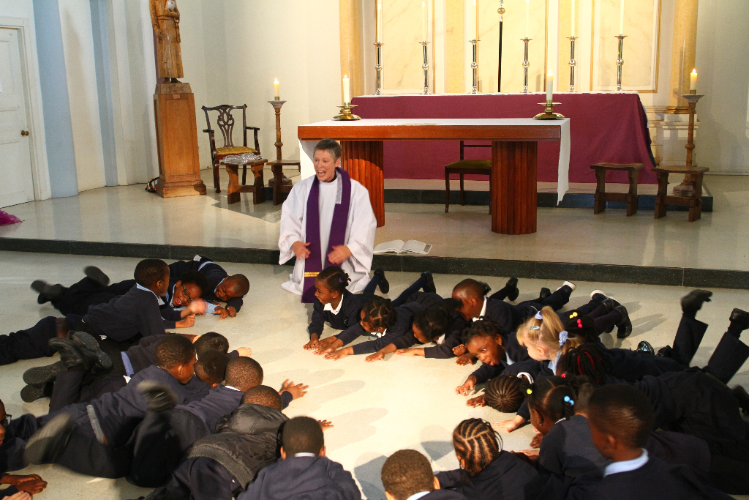
We often use imaginative aids for our Gathering Song, for instance, the purple scarves in this video. These encourage children to explore what their bodies are capable of, warm up imaginations, and mean that even the most self-conscious children can be drawn into movement.

2. Diddy Disciples celebrates repetition
There’s a huge range of choice in Diddy Disciples. But the idea is that you make your choices according to your resources and tradition, then you stick to them for at least a Unit (4-6 weeks). This helps to give children, especially the youngest and those with special needs, confidence. They know what to expect and what’s coming next. We’ve found that this doesn’t just help them join in, it also means they feel confident to take leading roles. This might be handing out or collecting stars or candles in the time for prayer, or it might mean leading a song. Keeping a familiar pattern is also great for leaders. Diddy Disciples can feel a bit daunting at first, but once you’ve done it once, then you’ll always be returning to familiar worship!
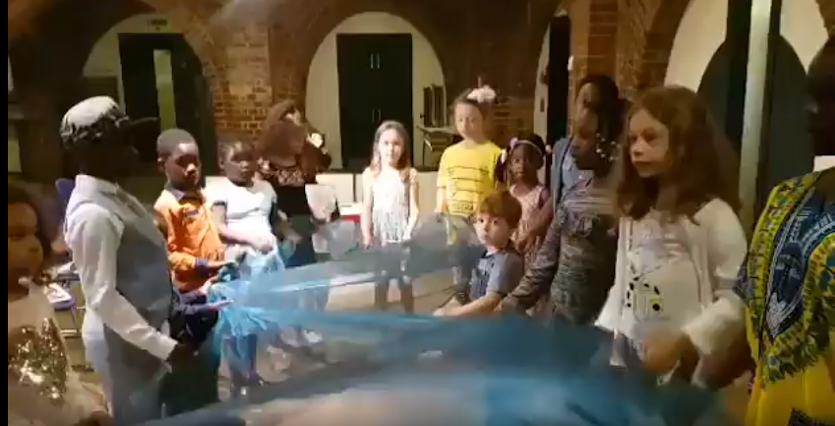
Repetition can also really help with behaviour management. For instance, we always finish our time for Creative Response (a free time, which involves craft and sensory activities) with the Peace Song that you can see in this video. Anyone working with children will know how hard it is to gather them after a creative activity! The Peace Song gives the children a clear signal that we’re about to gather again to go upstairs to join the adults, but at the same time allows them 2-3 minutes to stop what they’re doing and come and join us. Our rule is that once we’ve sung the song three times, everyone should be gathered around the cloth ready to share the Peace.
3. Diddy Disciples celebrates voices
Diddy Disciples involves lots and lots of singing to nursery rhymes or traditional songs like ‘Michael, Row the Boat Ashore’. We’ve found that singing means everyone can join in at the same time. After all, no one ever says too many singers spoil the song! Singing means there’s lots of chance to get to know the words if you’re not fluent in English, and there’s no need for shushing! One of my favourite videos is of one of our Diddy Disciples showing how even pre-verbal children can join in with the Diddy Disciples Sorry Song.

4. Diddy Disciples celebrates children’s spirituality
Rebecca Nye’s work on children’s spirituality has been hugely influential for me and I recommend that anyone read her book Children’s Spirituality and Why it Matters. Diddy Disciples assumes that children have an innate sense of God and innate sense of wonder. Here’s a glimpse in a picture from our Christmas Eve service, when the (biodegradable) glitter cannons go off!

In Diddy Disciples, we don’t aim to give children a sense of spirituality. Instead our aim is to help them children make connections between the spirituality that they’re born with and the kind of worship that they might experience in their local church.
5. Diddy Disciples celebrates being part of the Church.
The materials aren’t designed to help children learn about being a Christian or about the Bible or about the Church. Diddy Disciples is Church for little people. It’s worship in the same way as the main service is worship. If you’re using the material on a Sunday, the idea is that you build a service that reflects your main Sunday service. The church where Diddy Disciples started, St Peter’s Walworth, is in the catholic tradition. All our adult worship starts with the sign of the cross, so our children’s worship does too.

The idea is that you match your children’s worship to your adult worship as closely as possible. Having started with the catholic tradition, I worked with evangelical churches in the UK and Protestant churches in Northern Ireland to create a range of options that leaders can choose from according to their church’s tradition. It’s great to know that Diddy Disciples is now being used by Steve Chalke’s Oasis church in Waterloo, as well as in Philadelphia Cathedral, US and All Saints Rome. And I’ve just finished writing a Diddy Christingle for Children’s Society for a range of traditions that will be available from September 2018.
6. Diddy Disciples celebrates learning
The material is full of opportunities to support children in making connections with the world that they see around them: whether it’s blossom budding in the spring or fireworks in November. Diddy Disciples also deliberately incorporates the kinds of things children will learn about in school or nursery: colours, seasons, counting, plants growing.
The aim is to build a People of God who are used to making connections between their work life and their life with God right from the beginning.
7. Diddy Disciples celebrates emotions and feelings.
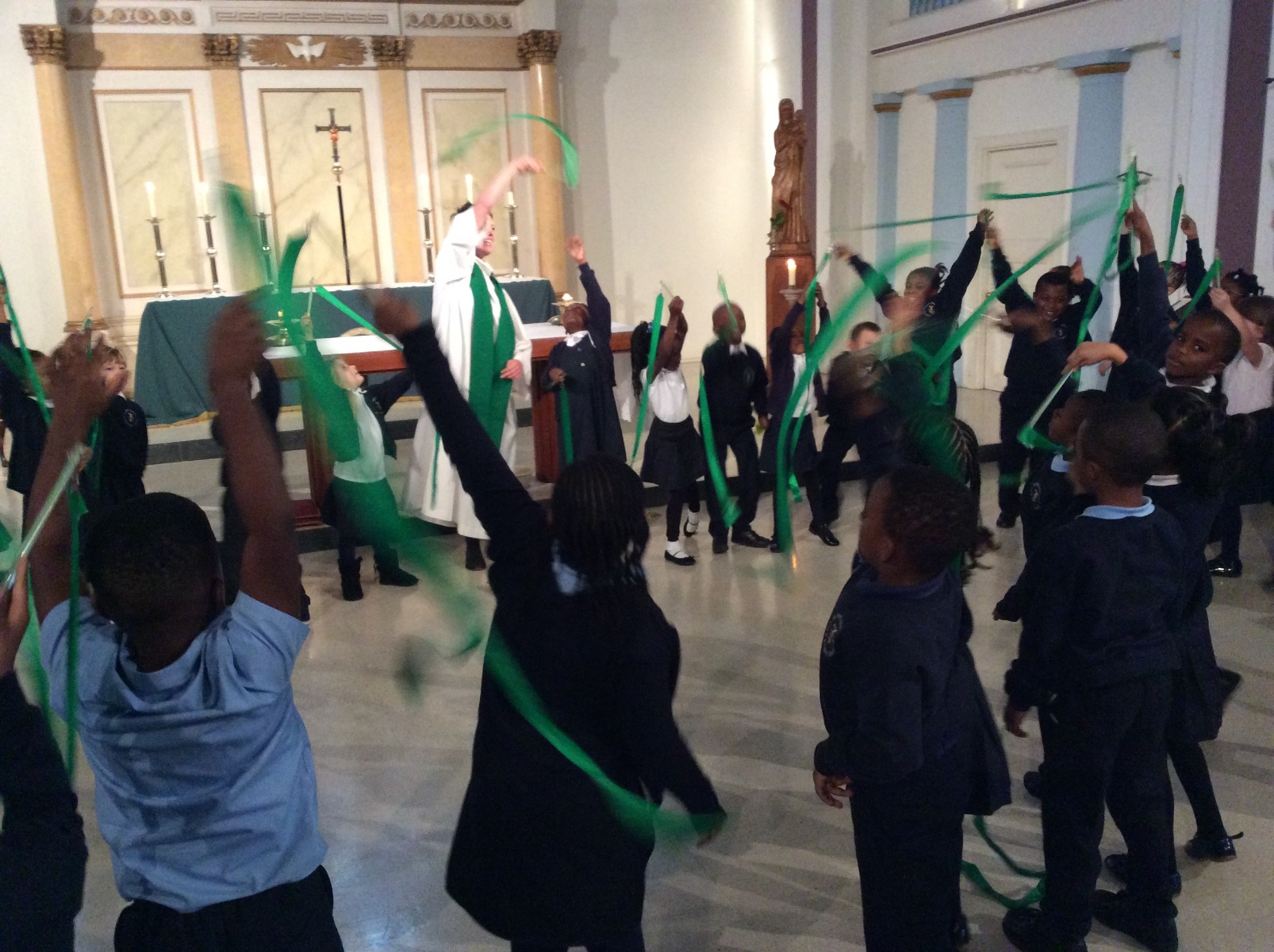
All human emotions are explored openly in the Bible. Take the book of Psalms, for instance, where jealousy, rage, anger, fear are brought before God, as well as joy, peace, love. Diddy Disciples takes the Bible’s example seriously. It aims to gather a People of God who are comfortable with bringing all sorts of feelings before God. Throughout the materials, there are all sorts of opportunities to explore emotions. For instance, telling the story of the angel Gabriel’s visit with Mary, we all become Mary. How do you think Mary’s feeling now? Can you show me with your whole body?

There are lots more Diddy Disciples materials to come. Keep in touch on Facebook or Twitter @DiddyDisciples or check out our website diddydisciples.org for more information and lots of free samples!
Related Posts
Categories
Recent Posts
1

Thoughtful Christian Books for Father’s Day
11 Jun 2026
5
Support SPCK with your donation
Either donate with a one-off donation or subscribe monthly.
Choose a type of donation
I want to donate
 I want to donate