

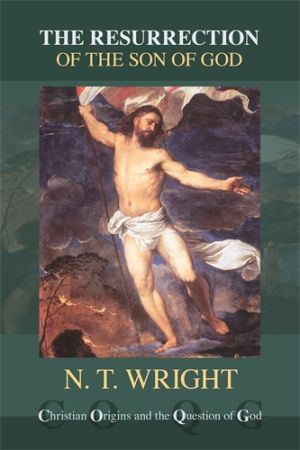
The Resurrection of the Son of God
This third volume in N. T. Wright’s magisterial series, Christian Origins and the Question of God
In stock
ISBN-13
9780281074464-grouped
From £36.00
"The most monumental defence of the Easter heritage in decades . . . The Resurrection of the Son of God marches through a clearly organized case that confronts every major doubt about Easter, ancient and modern."
A monumental achievement in its scope, depth and execution... a landmark in scholarly studies of the resurrection."
Wright has succeeded in building a theological cathedral of illuminated historical insights, convincing and surprising exegetical observations, and thoroughly argued systematic conclusions. No prophetic intuition is needed to predict thatthis book will remain a classic.
book really is a bomb thrown into the playground of the theologians. Not only that, it is perhaps even more unusual in being both a joy to read and nearly 850 pages in length . . . It is not only an excellent argument, it is a model for how scholarship should be done.
Displays on every page an enviable competence and lucidity in handling all the evidence.
About
N.T. Wright takes us on a fascinating journey through ancient beliefs about life after death, from the shadowy figures who inhabit Homer's Hades, through Plato's hope for a blessed immortality, to the first century, where the Greek and Roman world (apart from the Jews) consistently denied any possibility of resurrection.
We then examine ancient Jewish beliefs on the same subject, from the Bible to the Dead Sea Scrolls and beyond. This sets the scene for a full-scale examination of early Christian beliefs about resurrection in general and that of Jesus in particular, beginning with Paul and working through to the start of the third century.
Wright looks at all the evidence, and asks: Why did the Christians agree with Jewish resurrection belief while introducing into it - across the board - significant modifications?
To answer this question we come to the strange and evocative Easter stories in the gospels and ask whether they can have been late inventions. Wright seeks the best historical conclusions about the empty tomb and the belief that Jesus really did rise bodily from the dead, recognizing that it was this belief that caused early Christians to call Jesus 'Son of God'.
In doing so, they posed a political challenge as well as a theological one. These challenges retain their power in the twenty-first century.
We then examine ancient Jewish beliefs on the same subject, from the Bible to the Dead Sea Scrolls and beyond. This sets the scene for a full-scale examination of early Christian beliefs about resurrection in general and that of Jesus in particular, beginning with Paul and working through to the start of the third century.
Wright looks at all the evidence, and asks: Why did the Christians agree with Jewish resurrection belief while introducing into it - across the board - significant modifications?
To answer this question we come to the strange and evocative Easter stories in the gospels and ask whether they can have been late inventions. Wright seeks the best historical conclusions about the empty tomb and the belief that Jesus really did rise bodily from the dead, recognizing that it was this belief that caused early Christians to call Jesus 'Son of God'.
In doing so, they posed a political challenge as well as a theological one. These challenges retain their power in the twenty-first century.
Reviews
"The most monumental defence of the Easter heritage in decades . . . The Resurrection of the Son of God marches through a clearly organized case that confronts every major doubt about Easter, ancient and modern."
A monumental achievement in its scope, depth and execution... a landmark in scholarly studies of the resurrection."
Wright has succeeded in building a theological cathedral of illuminated historical insights, convincing and surprising exegetical observations, and thoroughly argued systematic conclusions. No prophetic intuition is needed to predict thatthis book will remain a classic.
book really is a bomb thrown into the playground of the theologians. Not only that, it is perhaps even more unusual in being both a joy to read and nearly 850 pages in length . . . It is not only an excellent argument, it is a model for how scholarship should be done.
Displays on every page an enviable competence and lucidity in handling all the evidence.

Diaries and Lectionaries
We are proud to offer our own range of lectionaries, diaries and notebooks that come in a variety of colours and patterns!
Learn more



We then examine ancient Jewish beliefs on the same subject, from the Bible to the Dead Sea Scrolls and beyond. This sets the scene for a full-scale examination of early Christian beliefs about resurrection in general and that of Jesus in particular, beginning with Paul and working through to the start of the third century.
Wright looks at all the evidence, and asks: Why did the Christians agree with Jewish resurrection belief while introducing into it - across the board - significant modifications?
To answer this question we come to the strange and evocative Easter stories in the gospels and ask whether they can have been late inventions. Wright seeks the best historical conclusions about the empty tomb and the belief that Jesus really did rise bodily from the dead, recognizing that it was this belief that caused early Christians to call Jesus 'Son of God'.
In doing so, they posed a political challenge as well as a theological one. These challenges retain their power in the twenty-first century.